
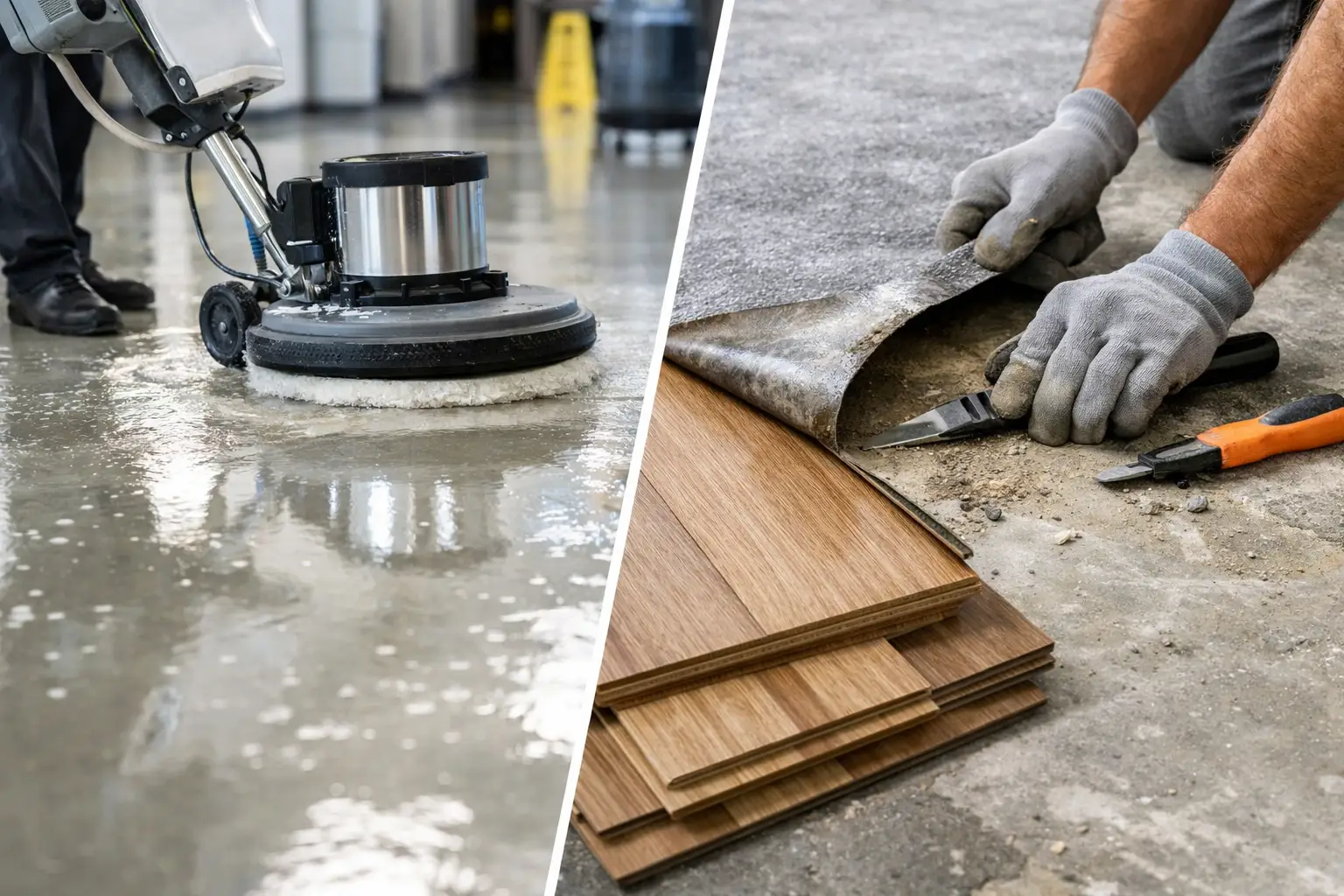
A dull, scuffed floor can make an otherwise clean office, rental, or home look neglected. When the surface starts showing traffic patterns, stains, and worn finish, the question is usually strip wax versus floor replacement. The right choice depends less on how the floor looks at first glance and more on what is happening underneath the finish.
For many local businesses and property owners, stripping and waxing can restore a floor’s appearance for a fraction of replacement cost. But it is not a cure for cracked tile, water-damaged subflooring, or flooring that has simply reached the end of its useful life. A careful assessment protects your budget and helps you avoid paying for a short-term cosmetic fix when a larger repair is needed.
What Strip and Wax Service Actually Does
Strip and wax service is designed primarily for resilient flooring, especially vinyl composition tile (VCT) and certain commercial vinyl floors. Over time, the protective wax finish collects scratches, stains, embedded soil, and discoloration. Daily mopping can remove loose dirt, but it cannot rebuild a worn finish.
During a professional strip-and-wax service, the old finish is removed using appropriate floor-cleaning products and equipment. The floor is then rinsed and prepared before new coats of finish are applied. Once cured, that finish creates a cleaner, more uniform appearance and adds a protective layer against daily foot traffic, spills, and scuffing.
The goal is not to make damaged flooring new again. It is to restore the protective finish and bring back the floor’s intended appearance where the material beneath remains sound. In offices, schools, retail spaces, medical settings, and apartment common areas, this maintenance can make a noticeable difference in presentation without the disruption of a renovation.
Strip Wax Versus Floor Replacement: The Core Difference
The biggest difference is simple: stripping and waxing renews the surface finish, while replacement removes the existing flooring material and installs something new.
If your VCT floor looks gray in walking lanes, has surface scratches, or has a yellowed, uneven finish, stripping and waxing may be the practical answer. The tile itself may still be firmly bonded, level, and free from serious damage. Restoring the finish can extend the floor’s service life and make routine cleaning easier.
Floor replacement becomes the stronger option when the flooring material is failing. Loose or cracked tiles, deep gouges, curling edges, moisture damage, broken seams, and an unstable subfloor are structural or material problems. Wax cannot hold down failing tile, repair a cracked surface, or correct water damage below the floor.
This distinction matters because a freshly waxed floor can look better temporarily even when major damage remains. A professional assessment should identify whether the issue is mostly finish wear or whether the floor itself needs repair or replacement.
Signs Your Floor May Be a Good Candidate for Strip and Wax
A strip-and-wax service is often worth considering when the floor is intact but no longer looks clean after normal maintenance. High-traffic paths near entrances, hallways, break rooms, reception areas, and checkout counters commonly wear faster than the rest of the floor.
Look for dullness, black heel marks, light scratching, uneven shine, wax buildup around edges, or discoloration that does not improve with mopping. These concerns often point to a worn or contaminated finish rather than failed flooring.
Strip and wax can also be a smart choice between tenants, after construction dust has settled, or before an important inspection, event, or property showing. It gives the space a more cared-for appearance while helping protect the underlying floor from further routine wear.
A good service plan also considers timing. Floors need adequate drying and curing time, so it is best to schedule work when the area can remain clear. For a business, that may mean after hours or on a weekend. For a rental property, it may mean coordinating service between occupants.
When Floor Replacement Is the Better Investment
Replacement is more disruptive and usually costs more upfront, but there are times when it saves money over repeated attempts to improve a failing floor. If the floor has extensive damage, paying for cosmetic restoration may only delay a necessary project.
Consider replacement when tiles are loose, missing, cracked across the surface, or repeatedly lifting at the edges. Water intrusion is another serious concern. If moisture has damaged adhesive, caused swelling, or affected the subfloor, the source of the moisture must be addressed before new flooring is installed.
Replacement may also make sense when the current material no longer fits the property’s needs. A busy retail space may need more durable flooring. A rental owner may want a material that is easier to maintain between tenants. A homeowner updating a kitchen or laundry area may prefer a different look or improved water resistance.
Safety should carry real weight in the decision. Uneven flooring, lifted edges, broken tile, and slick areas can create trip-and-fall risks. In customer-facing businesses, offices, and rental properties, addressing those risks promptly helps protect guests, residents, employees, and the property owner.
Not Every Floor Should Be Waxed
Wax is not appropriate for every flooring type. Many luxury vinyl plank, luxury vinyl tile, laminate, hardwood, ceramic tile, and natural stone floors have manufacturer-specific care requirements. Applying the wrong finish can leave residue, create an unwanted sheen, reduce traction, or interfere with a warranty.
For example, a luxury vinyl floor may look dull because it has accumulated cleaner residue or because its factory finish has worn. That does not automatically mean it needs traditional wax. Hardwood requires an entirely different evaluation, especially if the finish is worn through or the boards show moisture damage.
Before scheduling any floor revitalizing service, identify the flooring material if possible. If you are unsure, a qualified cleaning professional can review the surface condition and recommend an approach that fits the material instead of applying a one-size-fits-all treatment.
How to Compare the Real Costs
The lowest immediate price is not always the lowest total cost. Strip and wax is generally less expensive than replacement because it works with the existing floor and avoids demolition, new materials, installation, and disposal. It can be a strong value when the floor is in good physical condition.
However, its results are temporary maintenance, not a permanent reset. High-traffic commercial floors may need periodic refinishing and regular daily care to preserve their appearance. A neglected floor that receives heavy traffic may need service sooner than a lightly used area.
Replacement costs more because the scope is larger. Along with flooring materials and installation, there may be costs for moving furniture, removing old materials, repairing subfloors, managing moisture problems, and closing off the space during the work. Yet replacement can be the better long-term investment if maintenance needs are becoming frequent or the material is beyond practical repair.
Ask a practical question: will renewing the finish give this floor meaningful additional life, or are we spending money to hide a problem that will return quickly? The answer should guide the decision.
A Practical Decision Process for Property Owners
Start by looking closely at the floor after it has been thoroughly cleaned. Surface haze and scuffing may look severe until dirt and residue are removed. Then check for physical concerns such as cracks, lifting edges, soft spots, stains that seem to come from beneath the material, and damaged seams.
Next, consider how the space is used. A small office with controlled foot traffic may benefit from periodic strip-and-wax maintenance for years. A busy entryway exposed to rain, grit, carts, and constant traffic may require more frequent care or a more durable flooring solution.
Finally, think about the property’s timeline. For a move-out, tenant turnover, or short-term rental refresh, strip and wax may be the efficient way to improve an otherwise sound floor. For a long-term renovation or a property with repeated flooring issues, replacement may be worth planning properly rather than postponing.
CJ Cleaning Services can help coordinate dependable floor cleaning and revitalizing services for homes, rentals, and businesses throughout the surrounding Catawba County communities. A clear assessment and a service plan built around your schedule make it easier to improve your space without unnecessary disruption.
A floor does not have to be perfect to be worth restoring, but it does need to be sound. Choose strip and wax when the finish is worn and the flooring remains stable; choose replacement when the material, subfloor, or safety of the space is telling you it is time for a lasting change.