

Tile can look clean while the grout lines tell a different story. In busy kitchens, bathrooms, entryways, and rental properties, grout collects soap residue, cooking grease, tracked-in soil, and moisture. The best tile grout cleaning methods depend on what caused the discoloration, the type of tile you have, and how long the buildup has been sitting.
For homeowners and property managers across Catawba County and nearby communities, the goal is usually straightforward: get the floor or shower looking fresh again without damaging the tile, weakening the grout, or spending an entire weekend scrubbing. Start with the gentlest method that fits the problem, then step up only when needed.
Why Grout Gets Dirty So Quickly
Grout is more porous than glazed tile. That means it can absorb dirt, spills, oils, and moisture much more easily. On a bathroom floor or shower wall, soap scum and humidity can leave grout dull, dark, or discolored. In kitchens and commercial spaces, grease and foot traffic are often the bigger issue.
Light-colored grout shows the problem sooner, but dark grout can also hold buildup that makes a floor look flat or poorly maintained. If grout stays damp, especially around shower corners, mildew may also become part of the problem. Cleaning the tile surface alone will not fully address what has settled into those lines.
Best Tile Grout Cleaning Methods for Common Buildup
The right cleaner is not always the strongest cleaner. Harsh products can etch natural stone, wear away sealant, fade colored grout, or leave behind residue that attracts more soil. Test any new solution in an inconspicuous area first, especially on stone, older tile, or colored grout.
Warm Water and a Grout Brush for Routine Cleaning
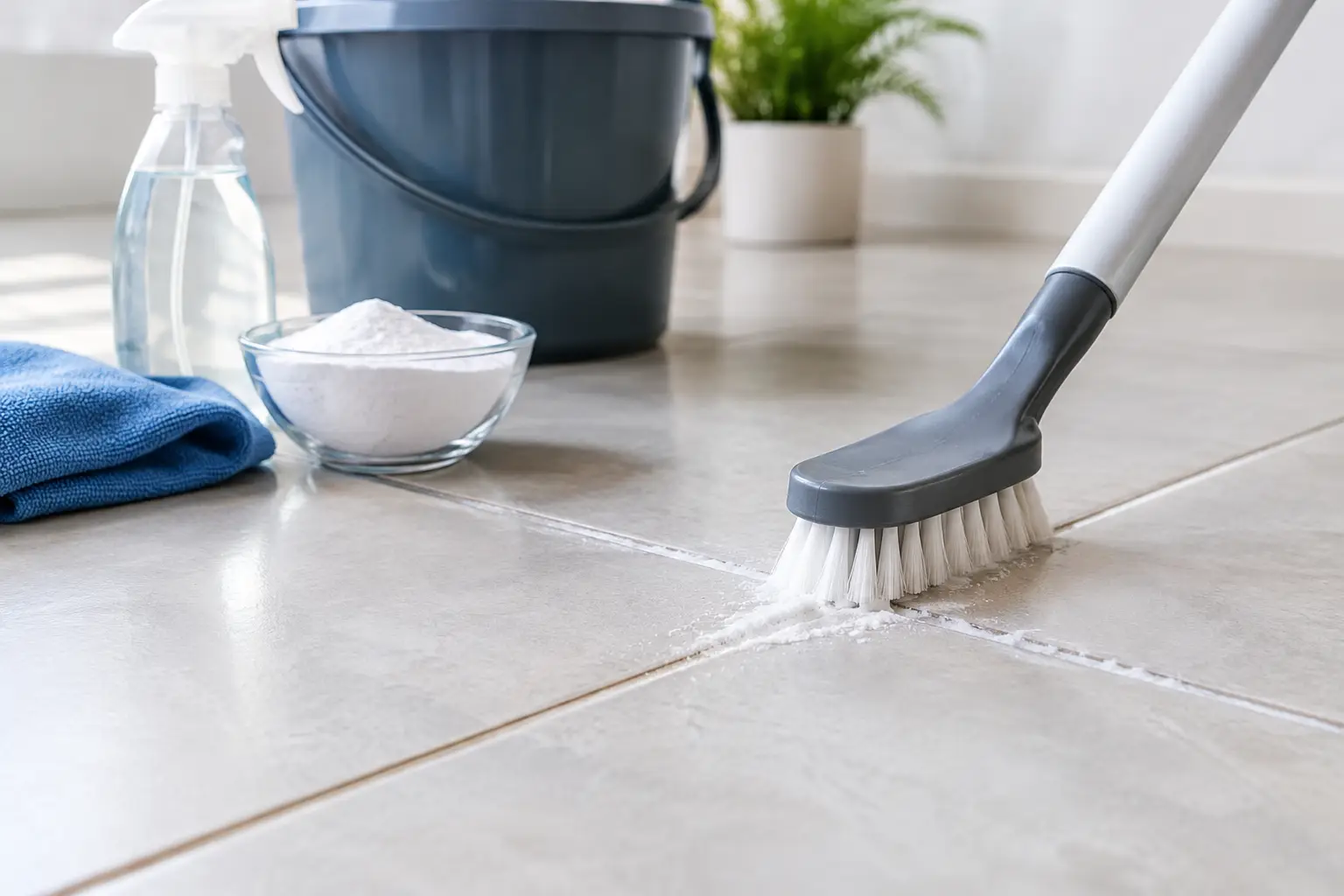
For regularly maintained tile, warm water and a stiff nylon grout brush are often enough to remove surface dirt. Work in small sections, scrub along the grout lines, and wipe up the dirty water with a clean microfiber cloth. A nylon brush is firm enough to clean without being as aggressive as a wire brush, which can damage grout and scratch some tile finishes.
This method is best for light buildup and weekly bathroom or kitchen maintenance. It will not do much for deep stains, mildew, or grease that has been sitting for months, but it helps prevent those problems from developing.
Baking Soda Paste for Dingy Grout
A paste made from baking soda and a small amount of water can help lift everyday dirt and mild staining. Apply it directly to the grout, let it sit briefly, then scrub with a nylon brush. Rinse thoroughly and dry the area with a towel or microfiber cloth.
Baking soda is a practical choice for many ceramic and porcelain tile surfaces because it is mildly abrasive without being overly harsh. Still, avoid using abrasive powders on delicate natural stone unless the manufacturer specifically approves them. Stone tile often needs a pH-neutral cleaner designed for that surface.
pH-Neutral Tile Cleaner for Natural Stone and Regular Care
Marble, travertine, slate, limestone, and other natural stone tiles need extra care. Vinegar, lemon juice, and many acidic bathroom cleaners can dull or etch stone. A pH-neutral tile and grout cleaner is the safer choice for regular cleaning, along with a soft brush or nonabrasive pad.
This approach may take more than one cleaning session if the grout is heavily stained, but it protects the investment you made in the floor or shower. When in doubt, treat natural stone as a specialty surface instead of using whatever cleaner is under the sink.
Oxygen-Based Cleaner for Deep Grout Stains
Oxygen-based powdered cleaners can be effective for embedded dirt and organic stains in ceramic or porcelain tile grout. Mixed according to the label, they release oxygen as they work and can help brighten grout without the strong odor associated with some chlorine-based products.
Apply the solution, allow the recommended dwell time, scrub, and remove all residue with clean water. Do not let cleaning solutions dry on the tile. The process matters as much as the product: giving the cleaner time to work reduces the amount of hard scrubbing needed.
For a shower with mildew or a floor with years of traffic soil, one application may not restore the grout completely. That does not always mean the product failed. Some discoloration is permanent staining, while other grout may be worn, cracked, or missing its protective sealer.
Degreaser for Kitchen Floors and Commercial Tile
Kitchen grout often needs a different approach than bathroom grout. Grease can bond with dust and food residue, creating a dark film that water and general-purpose cleaner will not fully remove. A tile-safe degreaser can break down that buildup before you scrub.
Use the product sparingly and follow its directions. Too much degreaser, or poor rinsing, can leave a slippery residue on floors. This is especially important for restaurants, break rooms, rental turnovers, and homes with active families or pets. After cleaning, rinse well and dry the floor so it is safe to walk on.
What to Avoid When Cleaning Grout
Bleach can brighten some white grout, but it is not a universal answer. Frequent bleach use may weaken grout over time, and it should never be mixed with ammonia, vinegar, acids, or other cleaners. The fumes and chemical reactions can be dangerous. Bleach is also not appropriate for every tile surface or every stain.
Avoid metal brushes, steel wool, and highly abrasive scouring pads. They can rough up grout and tile, creating more places for dirt to collect. Steam cleaning can be useful on certain sealed ceramic and porcelain surfaces, but excessive heat and moisture may be a poor fit for damaged grout, loose tile, or some natural stone installations.
A common mistake is applying a cleaner, scrubbing quickly, and rinsing before the product has time to work. Another is using too much water in a shower or on a floor with failing grout. If grout is cracked, soft, or missing, cleaning alone will not repair it.
When Professional Tile and Grout Cleaning Makes Sense
Do-it-yourself cleaning works well for ongoing maintenance. Professional service becomes the better choice when the grout remains dark after repeated cleaning, there is widespread grease buildup, the space is large, or you need reliable results on a deadline.
This is often the case for move-out cleaning, post-renovation projects, short-term rental turnovers, offices, and customer-facing commercial spaces. Deep cleaning equipment and professional-grade solutions can remove more embedded soil while reducing the time spent on hands-and-knees scrubbing. A trained cleaner can also identify whether the issue is dirt, mildew, damaged grout, or a missing sealant.
For homeowners in Hickory, Maiden, Newton, Lincolnton, Mooresville, Denver, and surrounding areas, CJ Cleaning Services can coordinate trusted specialty cleaning support for tile and grout that needs more than routine care. It is a convenient option when you want your floors, showers, or entryways ready for guests, tenants, customers, or everyday life.
Keep Clean Grout Looking Better Longer
The easiest grout to clean is grout that has not had time to absorb heavy buildup. Sweep or vacuum tile floors before mopping so grit does not get pushed into the grout lines. In bathrooms, use ventilation during and after showers, and wipe standing water from tiled surfaces when possible.
Use a cleaner that matches your tile type, rinse away residue, and address spills quickly. Once grout is fully clean and dry, sealing may help reduce future staining, depending on the grout and installation. Sealers are not permanent, and they do not replace regular cleaning, but they can make maintenance more manageable.
Clean grout changes the whole impression of a room. Whether you are maintaining a family bathroom, preparing a rental, or keeping a business presentable, a careful cleaning approach protects the tile and helps the space look properly cared for.