


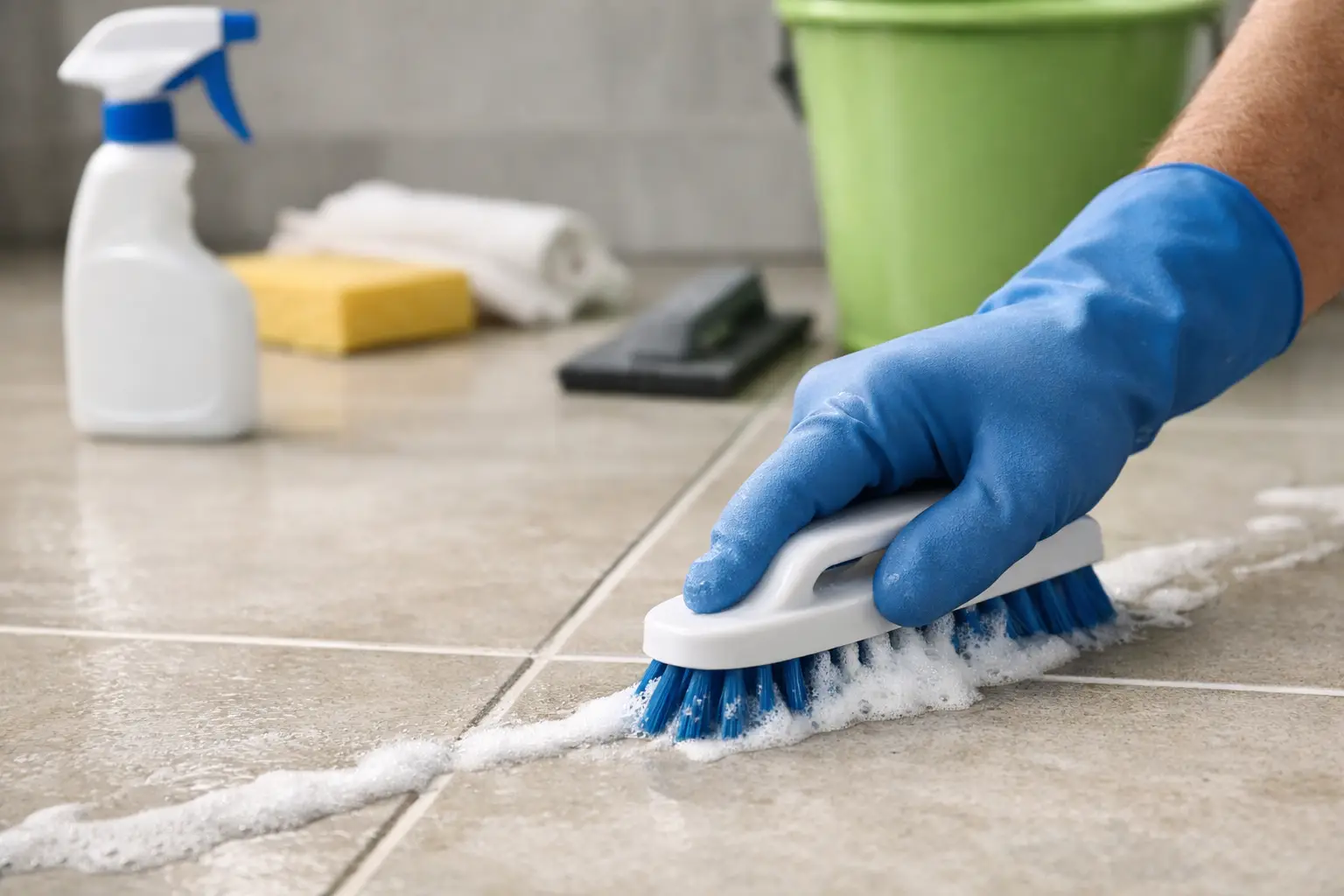
Grout is often the first part of a tiled floor or shower to look dirty, even when the tile itself is clean. This tile grout cleaning guide explains what causes discoloration, which methods are safe for common surfaces, and when a deeper professional cleaning is the practical choice.
Why Grout Gets Dirty Faster Than Tile
Grout is porous, which means it can absorb moisture, soap residue, cooking grease, dirt, and spills more easily than glazed tile. In bathrooms, damp conditions can also encourage mildew growth. On kitchen floors and entryways, foot traffic pushes soil into grout lines until regular mopping no longer makes much difference.
The color of the grout matters, too. Light grout can show staining quickly, while dark grout may hide soil until it becomes embedded. Either way, buildup can make an otherwise clean room look neglected.
Before choosing a cleaning method, identify the problem. Surface dirt, soap scum, mildew, hard-water deposits, and deep stains do not all respond to the same cleaner. Using a stronger product than necessary can damage grout, strip sealant, or leave a residue that attracts more dirt.
Tile Grout Cleaning Guide: Start With the Right Supplies
For routine cleaning, use a soft-bristle grout brush or an old toothbrush, warm water, a neutral-pH tile cleaner, clean microfiber cloths, and a bucket. A spray bottle is useful for applying cleaner evenly without soaking the floor.
Avoid wire brushes, abrasive scouring pads, and harsh acid-based products unless you know the tile and grout can handle them. Natural stone such as marble, travertine, limestone, and slate is especially sensitive to acidic cleaners. Vinegar may be a popular household option, but it is not a good all-purpose answer for every tiled surface. It can etch or dull certain stone tiles and may weaken grout over time with repeated use.
Bleach also deserves caution. It can brighten some stains temporarily, but frequent use may degrade grout, affect colored grout, and create strong fumes in enclosed spaces. Never mix bleach with vinegar, ammonia, or other cleaning products.
Test Before You Treat the Entire Area
Choose a small, less visible grout line and test the cleaner first. Let it sit for the recommended time, rinse thoroughly, and check for color changes or dullness after the area dries. This small step is especially worthwhile in a shower, on older tile, or after a renovation where grout and sealant may vary from one area to another.
A Safe Process for Routine Grout Cleaning
Start by vacuuming or sweeping tiled floors. Loose sand and grit can scratch tile when you begin scrubbing. In showers or backsplashes, wipe away loose dust, hair, and product residue first.
Apply a neutral tile-and-grout cleaner according to the label directions. Give it a few minutes of dwell time so it can loosen soil, but do not let it dry on the surface. Then scrub grout lines gently with a soft brush using short back-and-forth strokes. You do not need to press hard enough to wear away the grout.
Rinse well with clean water and wipe away the dirty solution with a microfiber cloth or mop. This part matters. If cleaning residue is left behind, the grout may look cloudy and attract soil again. Finish by drying the area as much as possible, particularly in bathrooms where standing moisture contributes to mildew.
For most homes, this level of cleaning every few weeks helps keep grout from becoming deeply stained. High-traffic floors, short-term rentals, commercial restrooms, and busy kitchens may need attention more often.
How to Handle Common Grout Problems
Soap scum in showers usually responds best to a cleaner designed to break down bathroom residue. Apply it carefully, allow the stated contact time, scrub lightly, and rinse completely. Keep the bathroom ventilated while cleaning.
Mildew often appears as dark spotting in shower corners, around tubs, or on grout that stays damp. A mildew-specific cleaner may help, but the long-term fix is reducing moisture. Run the exhaust fan during and after showers, repair leaks promptly, and dry wet corners when possible.
Greasy kitchen grout needs a degreasing cleaner rather than a product made only for soap scum. Grease can create a film that traps dust and turns grout lines yellow or gray. Clean the floor in manageable sections so the product does not dry before you can rinse it.
Hard-water stains can leave white, chalky deposits around shower floors and wall tile. These may require a mineral-deposit cleaner, but read the label closely and confirm that it is appropriate for your tile type. If you have natural stone, it is safer to use a stone-approved product or arrange for a professional assessment.
Deep brown, black, or uneven discoloration may not be a cleaning issue alone. Grout can become permanently stained, damaged, or worn away. In that case, intensive scrubbing may produce limited results, and color sealing, grout repair, or replacement may be the better investment.
Protect Grout After It Is Clean
Once grout is clean and completely dry, sealing can help slow future staining. A penetrating grout sealer creates a protective barrier while allowing the material to breathe. It does not make grout maintenance-free, but it gives spills and moisture less chance to soak in.
Whether your grout needs sealer depends on the grout type, its age, and whether it was sealed previously. Some modern grouts have additives that improve stain resistance, while older cement-based grout often benefits from regular sealing. If water quickly darkens a grout line instead of beading at the surface, the sealer may be worn.
Daily habits make the biggest difference. Wipe spills soon after they happen, use doormats at exterior entrances, and avoid leaving wet bath mats on tile floors. In showers, a quick squeegee after use can reduce the soap and mineral buildup that leads to stubborn grout stains.
When Professional Tile and Grout Cleaning Makes Sense
A homeowner can handle light soil and routine upkeep, but there are situations where professional service saves time and protects the surface. Consider scheduling help when grout remains dark after repeated cleaning, when a large tiled area needs attention, or when you are preparing a home, rental, or business for guests, tenants, customers, or an inspection.
Professional cleaners can use commercial-grade equipment and appropriate solutions to remove embedded soil more efficiently than hand scrubbing alone. The right approach depends on the tile material, grout condition, and type of buildup. A reliable provider should assess the surface before using aggressive chemicals or pressure-based methods.
This can be particularly helpful after construction work, a move-out, or a busy season in a short-term rental. Fine dust, adhesive residue, and heavy foot traffic can leave floors looking worn even when they have been mopped regularly. Restoring the grout lines can improve the overall appearance of the room without replacing the tile.
For homeowners and businesses in Catawba County and nearby North Carolina communities, CJ Cleaning Services can coordinate trusted specialty cleaning support for tile and grout needs. It is a convenient option when the job calls for more than a brush and a free afternoon.
A Better Maintenance Schedule for Tiled Spaces
There is no single schedule that fits every floor or shower. A guest bathroom used occasionally may only need routine grout care once a month. A family shower, restaurant entryway, office restroom, or rental property may need weekly attention and periodic deep cleaning.
Pay attention to the signs instead of waiting for grout to look severely stained. If mopping leaves grout lines dull, water no longer beads on the surface, or odors linger in a shower, it is time to clean more thoroughly. Regular maintenance is usually less expensive and less frustrating than trying to reverse years of buildup.
Clean grout does more than improve appearance. It helps tiled rooms feel cared for, reduces the chance of lingering moisture problems, and supports a better first impression for everyone who walks through the door. A consistent routine, paired with professional help when needed, keeps the job manageable.