

A couch can look clean and still hold the unmistakable smell of a pet accident. That is because upholstery cleaning for pet odors is not just about treating the surface fabric. Odor-causing residue can settle into cushion filling, seams, backing, and the area beneath removable cushions. For busy households, rental owners, and pet-loving families, the right cleaning approach restores comfort without guessing at what is hiding in the furniture.
Why Pet Odors Stay in Upholstery
Pet urine, saliva, dander, and oils do more than leave a temporary smell. When moisture dries, it can leave behind crystals and organic residue. Humidity, warm rooms, or even a pet returning to the same spot can reactivate that odor later. A quick spray may make the furniture smell better for an afternoon, but fragrance does not remove the source.
Upholstered furniture is especially challenging because it is layered. The visible fabric may dry quickly while liquid moves deeper into foam padding or batting. On some sofas and chairs, moisture can also reach the wood frame or the fabric beneath the cushions. The longer an accident sits, the more likely it is that simple spot cleaning will not be enough.
This is why a clean-looking chair may still smell unpleasant when someone sits down, turns on the heat, or closes up the room. It is also why pet odors can become a concern before guests arrive, during a move-out, or when preparing a short-term rental for the next booking.
Upholstery Cleaning for Pet Odors Starts With the Source
Effective odor treatment begins with identifying where the contamination is and how far it may have traveled. A professional cleaner may inspect cushion seams, removable inserts, the underside of furniture, and surrounding carpet or rugs. In some cases, the odor is coming from a nearby area rather than the upholstery itself.
The cleaning method should match the upholstery material. Microfiber, cotton blends, velvet, leather, wool, and performance fabrics all respond differently to moisture and cleaning solutions. Using the wrong product can leave water rings, discoloration, stiff fabric, or damage to the fibers. Furniture cleaning codes, usually found on a manufacturer tag, provide useful direction, but they are not a substitute for testing a discreet area first.
For odor caused by urine or other organic residue, an enzyme-based treatment is often the right starting point. These treatments are designed to break down the material causing the odor rather than cover it with perfume. They need enough contact time to work, and they must reach the affected area. If the residue has soaked into padding, treating only the top layer is unlikely to provide lasting results.
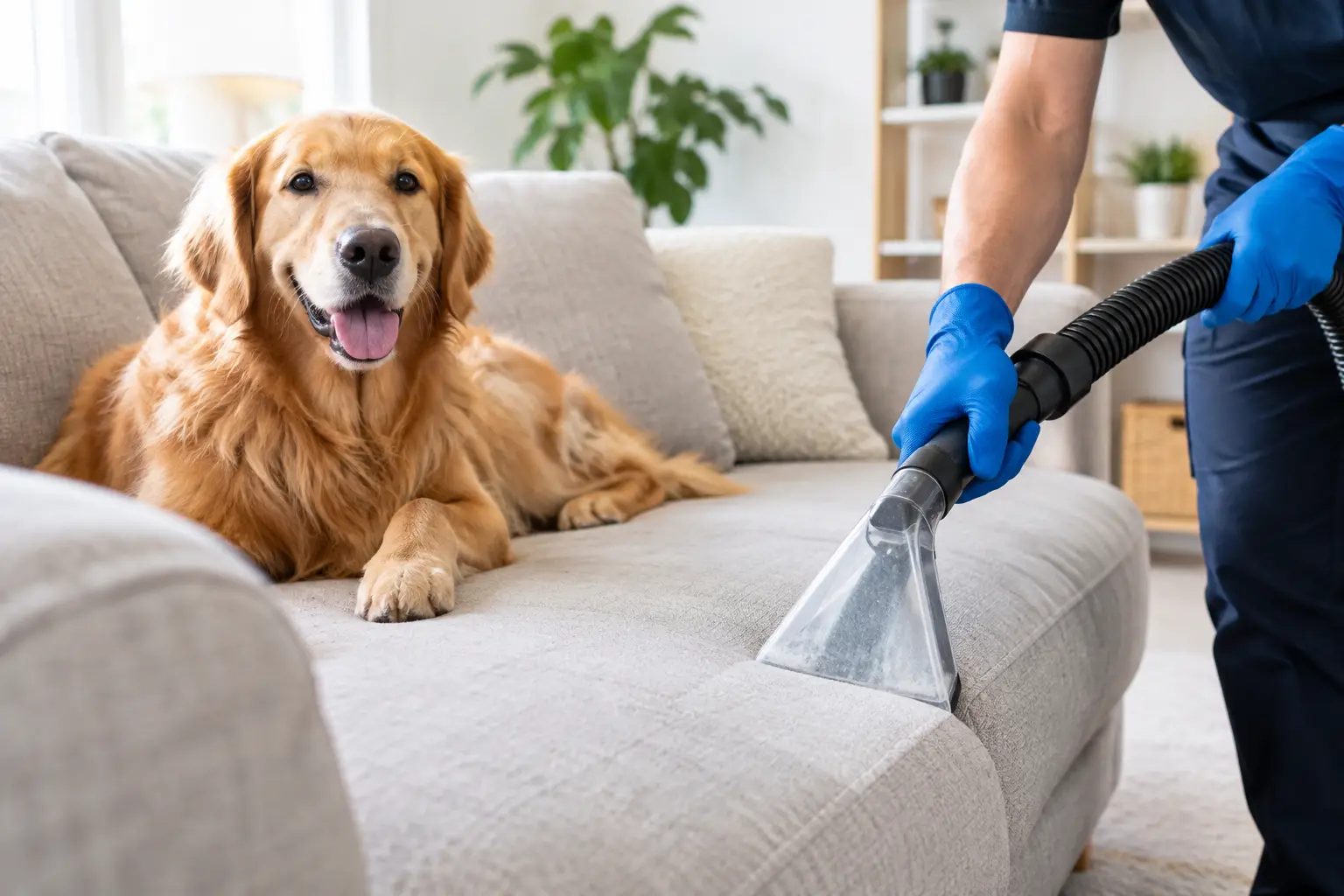
After targeted treatment, the furniture may need a suitable extraction or low-moisture cleaning process to remove loosened soil and remaining residue. Proper drying matters just as much as the cleaning itself. Leaving upholstery overly wet can create a musty smell and may encourage mold or mildew in humid conditions.
When Store-Bought Products Can Help
For a fresh, small accident on a washable fabric, prompt action can make a real difference. Blot the area with clean white towels, working from the outside toward the center. Avoid rubbing, which can push moisture deeper and spread the stain. Then use a pet-safe product that is appropriate for the fabric and follow the label directions carefully.
Home treatment is most useful when the spot is recent, the affected area is small, and the furniture is made from a cleanable material. It may not be the right answer when the odor returns after drying, the stain has been treated several times, or the pet has repeatedly used the same area.
Be cautious with popular home remedies. Heavy applications of vinegar, baking soda, dish soap, or peroxide can leave their own residue, alter fabric color, or create a sticky surface that attracts dirt. Mixing cleaning chemicals is also unsafe. If you are unsure what was previously applied to the fabric, it is better to stop adding products and have the upholstery assessed.
Signs It Is Time for Professional Service
A professional upholstery cleaning appointment is a practical choice when the problem is larger than a single fresh spot. It can save time, reduce trial-and-error cleaning, and help protect furniture you plan to keep.
Consider scheduling service if you notice any of these situations:
- The odor returns after the couch or chair dries.
- The accident has reached cushion inserts, padding, or the furniture frame.
- There are older stains with an unknown cleaning history.
- The upholstery is delicate, light-colored, vintage, or labeled with a restricted cleaning code.
- You are preparing a home, rental, office waiting area, or short-term rental for visitors.
Pet odor removal has limits, and dependable service means being honest about them. Deep, repeated contamination may require cleaning both the upholstery and the cushion inserts. If residue has reached the frame or damaged the padding, replacement of the insert or additional restoration work may be more effective than cleaning alone. A qualified cleaner should explain the condition of the furniture and set realistic expectations before treatment begins.
Protect Your Furniture After Cleaning
Once upholstery has been professionally cleaned, a few simple habits can help it stay fresh longer. Give furniture adequate airflow while it dries, and avoid placing cushions back together before they are fully dry. If possible, keep pets off treated furniture until drying is complete.
Washable throws or pet blankets can protect a favorite section of the sofa and are easier to clean between appointments. Vacuuming upholstery regularly also removes dander, loose hair, and dry soil that can hold odor. For pets that return to one location, address the behavior and use a washable barrier while you work on a longer-term solution.
For homes with multiple pets, seasonal upholstery cleaning can be a sensible part of routine home care. The right timing depends on the household. A family with one older pet and no accidents may only need occasional service, while a home with shedding dogs, puppies, cats, or frequent visitors may benefit from more regular cleaning.
A Better Choice for Homes and Rentals
Clean furniture affects more than appearance. It helps a living room feel welcoming, makes a rental more guest-ready, and gives property managers confidence during turnover. In offices and customer-facing spaces, fresh seating also supports the professional impression you want visitors to have.
CJ Cleaning Services helps connect Catawba County-area customers with vetted independent cleaning professionals for upholstery and specialty cleaning needs. Whether you are in Hickory, Maiden, Newton, Lincolnton, Mooresville, Denver, or a nearby community, scheduling support and clear service coordination make it easier to get the help you need without adding another task to your week.
If pet odors are affecting furniture you use every day, do not wait until they become part of the room. A timely assessment and the right cleaning method can help your upholstery feel like home again – comfortable for your family and ready for anyone who walks through the door.