

A restroom can shape how people feel about your business faster than almost any other space. Employees notice when supplies run out, odors linger, or floors stay damp too long. Visitors notice it too. That is why office restroom cleaning standards are not just about appearance – they affect health, morale, and the way your workplace is judged.
For office managers, property managers, and local business owners, the challenge is usually not deciding whether restrooms matter. The challenge is defining what “clean” actually means and making sure that standard holds up on a busy Monday morning just as well as it does after a quiet afternoon service. A restroom that looks acceptable at a glance can still miss the mark if touchpoints, dispensers, partitions, and floors are not cleaned consistently and correctly.
What office restroom cleaning standards should cover
A real standard is more than a quick wipe-down. It sets clear expectations for cleanliness, restocking, odor control, and safety. In practical terms, that means toilets and urinals should be sanitized, sinks and counters should be cleaned and dried, mirrors should be free of streaks, trash should be emptied before overflow becomes an issue, and high-touch areas should be disinfected on a routine schedule.
The best standards also account for what people experience, not just what a checklist says. If a restroom smells bad, has water pooled near sinks, or shows soap buildup around fixtures, most users will consider it dirty even if it was technically serviced. Cleanliness in a workplace restroom is both visible and invisible. You need sanitary surfaces, but you also need a space that feels maintained.
Why restroom standards matter in an office setting
Restrooms carry a heavier burden than many other office spaces. They deal with moisture, bacteria, frequent touchpoints, and steady traffic. A poorly maintained break room may look sloppy. A poorly maintained restroom can lead to complaints, health concerns, and a damaged impression of the entire business.
For employees, restroom conditions send a message about how the workplace is managed. If basic hygiene spaces are neglected, staff may assume other maintenance issues are being overlooked too. For clients, vendors, and guests, an unclean restroom can quietly undermine confidence. In customer-facing businesses, that is a problem you do not want attached to your brand.
There is also the issue of consistency. A restroom that gets a deep clean once a week but slips the rest of the time is still going to create frustration. Standards only work when they are tied to a realistic service frequency and a team that follows through.
The most important areas to monitor
Some restroom surfaces get attention because they are easy to see. Others matter more because they carry the highest contact. Both count.
Toilets and urinals should be cleaned and disinfected thoroughly, including seats, handles, rims, bases, and the surrounding wall or floor area where splashing can happen. Sinks need more than a polished faucet. The basin, countertop edges, splash zones, and drains all need regular attention because soap residue and standing moisture build up quickly.
Doors, stall locks, dispenser buttons, light switches, and grab bars are some of the most frequently touched spots in the room. When these are skipped, the restroom may still look clean in photos while falling short in daily use. Floors matter too, but they require balance. A freshly mopped floor that stays wet too long creates a safety concern, especially in workplaces with steady foot traffic.
Office restroom cleaning standards by frequency
Not every office needs the same cleaning schedule. A small office with a handful of employees may do well with daily service and supply checks. A medical office, retail business, or high-traffic workplace may need multiple touch-ups each day. The right standard depends on occupancy, visitor volume, business hours, and the type of work being done in the building.
That is where many businesses get into trouble. They use one fixed schedule without considering actual traffic. If your restroom is used by employees only, your standards may focus on dependable daily cleaning and weekly deeper attention to grout, partitions, vents, and corners. If the restroom also serves customers or shared tenants, the standard usually needs more frequent trash removal, restocking, and touchpoint disinfection.
A useful way to think about frequency is to separate tasks into daily, recurring touch-up, and deeper detail cleaning. Daily service handles sanitation, visible mess, and supplies. Touch-up service keeps the restroom presentable between full cleanings. Detail cleaning tackles buildup that develops slowly but affects the overall condition of the room.
Supplies and restocking are part of the standard
A restroom is not truly maintained if it is clean but missing basics. Soap, paper towels, toilet tissue, and hand sanitizer all shape the user experience. Empty dispensers create complaints just as fast as dirty counters.
Good office restroom cleaning standards include routine restocking and checking dispenser function, not just refilling products when something is already empty. Broken dispensers, jammed paper towel units, and leaking soap containers should be treated as service issues, not minor annoyances. They change how people use the space and how they judge the building.
Product choice matters as well. Strong fragrances can sometimes mask an odor issue rather than solve it, and harsh chemicals can leave a restroom smelling overly treated instead of fresh. In most offices, the goal is a clean, neutral environment that feels sanitary without being overwhelming.
Odor control is a cleaning issue, not just an air freshener issue
When people complain about restrooms, odor is usually near the top of the list. The mistake many businesses make is treating odor as separate from cleaning. It is usually connected.
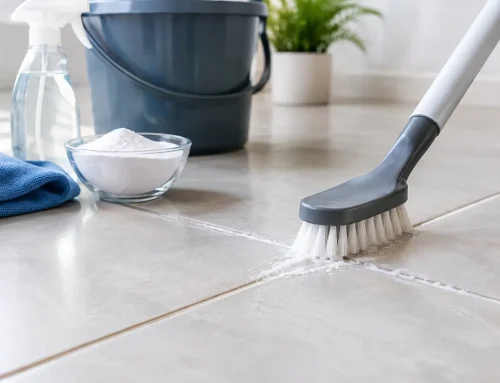
Odors often come from floor drain areas, grout lines, toilet bases, trash bins, and moisture that sits too long in hidden spots. If those areas are not cleaned properly, a spray or deodorizer may cover the smell for an hour, but it will come back. Strong office restroom cleaning standards focus on removing the source. That means cleaning under fixtures where possible, addressing splash zones, changing liners regularly, and not letting damp mops spread odor from one area to another.
Ventilation also plays a role. Even a well-cleaned restroom can feel stale if airflow is poor. Cleaning standards should work alongside basic facility maintenance, because some restroom complaints are partly a ventilation issue rather than a housekeeping issue alone.
What businesses should expect from a professional cleaning plan
A professional restroom cleaning plan should be specific. “We clean the restrooms” is not enough. You should know what gets disinfected, how often supplies are checked, how trash is handled, and whether the service includes periodic detail work for floors, tile, partitions, and fixtures.
You should also expect consistency. The value of a professional service is not just that the restroom gets cleaned once. It is that the standard stays in place week after week, even when staffing changes, schedules shift, or the office gets busier than usual.
For many local businesses, flexibility matters just as much as quality. A standard cleaning plan may need to be adjusted during flu season, after events, during tenant turnover, or when office occupancy changes. That is one reason many businesses prefer working with a provider that can coordinate dependable service without making the process harder than it needs to be. CJ Cleaning Services, LLC understands that commercial clients need clear expectations, vetted professionals, and service that fits the pace of the workplace.
Common gaps that lower restroom standards
Most restroom problems do not come from one major failure. They come from small misses that repeat. A trash can gets left at three-quarters full until it overflows the next day. The floor gets mopped, but corners collect dust and paper fibers. The mirror shines, but the sink drain has buildup. Over time, those details make the whole restroom feel neglected.
Another common gap is relying too heavily on appearance. A restroom can look decent from the doorway while touchpoints and hidden areas are being missed. That is why strong standards combine visual checks with routine sanitation steps. Clean should mean more than “good enough at a glance.”
If you manage an office, the goal is simple: create a restroom standard that protects health, supports your company image, and holds up under real use. When that standard is clear and consistently delivered, people may not comment on it often – and that is usually a good sign. A well-kept restroom does its job quietly, which is exactly what most businesses need.