

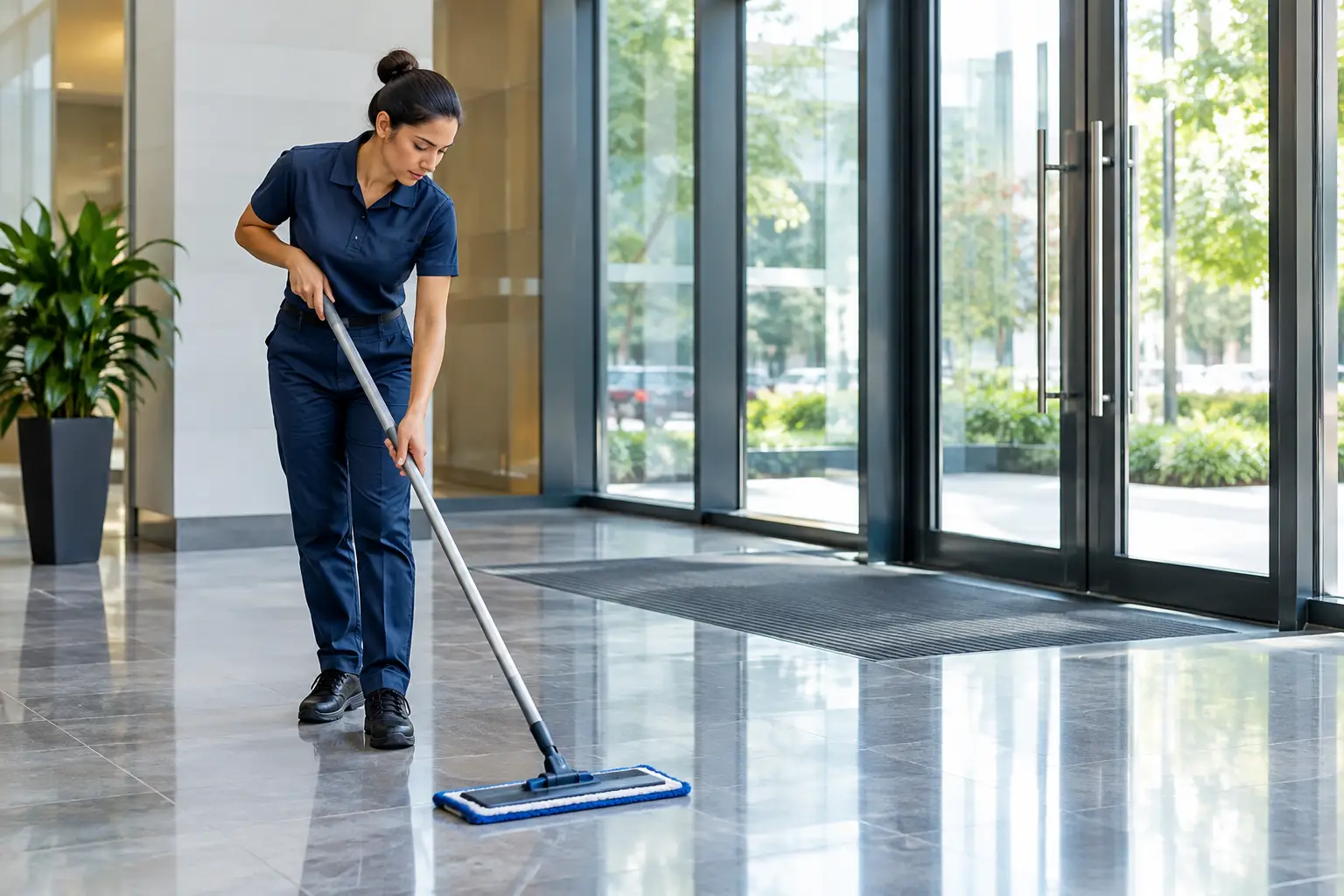
A customer may not notice a freshly cleaned lobby, but they will notice grit underfoot, streaked glass, overflowing mats, or muddy footprints at the door. The best commercial entryway cleaning tips focus on stopping soil before it spreads, protecting expensive flooring, and giving every visitor a clean first impression from the moment they walk in.
For offices, medical practices, retail spaces, property management offices, and other local businesses, the entryway does more work than almost any other part of the building. It collects rainwater, pollen, red clay, salt, leaves, and debris while handling constant foot traffic. A dependable routine keeps that wear under control instead of turning the whole facility into a daily cleanup project.
Best Commercial Entryway Cleaning Tips That Work
The most effective entryway program is not about using more chemicals or scrubbing harder. It is about using the right materials, cleaning at the right intervals, and giving attention to the areas people touch and see first.
Start with a layered mat system
One small mat directly inside the door is rarely enough for a busy commercial space. Use a scraper mat outside to loosen dirt, followed by an absorbent mat just inside the entrance. In larger spaces, a third runner can capture moisture and fine soil before people reach carpet, tile, vinyl, or hardwood flooring.
Mat placement matters as much as mat quality. Mats should be wide enough to cover the natural walking path and long enough for several steps. If visitors can easily walk around them, the mats are not doing their job. Check that corners lie flat and that the backing grips the floor securely, especially during wet weather.
Vacuum or shake out mats daily, then schedule deeper extraction or laundering as traffic requires. A dirty mat eventually becomes a source of soil rather than a barrier against it.
Clean for the weather, not only the calendar
A weekly schedule is a useful baseline, but entryways need more attention after a heavy rain, during pollen season, or when leaves and dirt are being tracked in. North Carolina weather can change quickly, and a clean entrance at 8:00 a.m. may need a touch-up by lunchtime.
Build a simple weather response into the cleaning plan. On dry, low-traffic days, vacuuming, spot cleaning, and glass touch-ups may be enough. On wet days, inspect the entrance several times, remove standing water promptly, and place caution signage when floors are damp. This protects visitors and employees while helping prevent slips and falls.
Vacuum before mopping
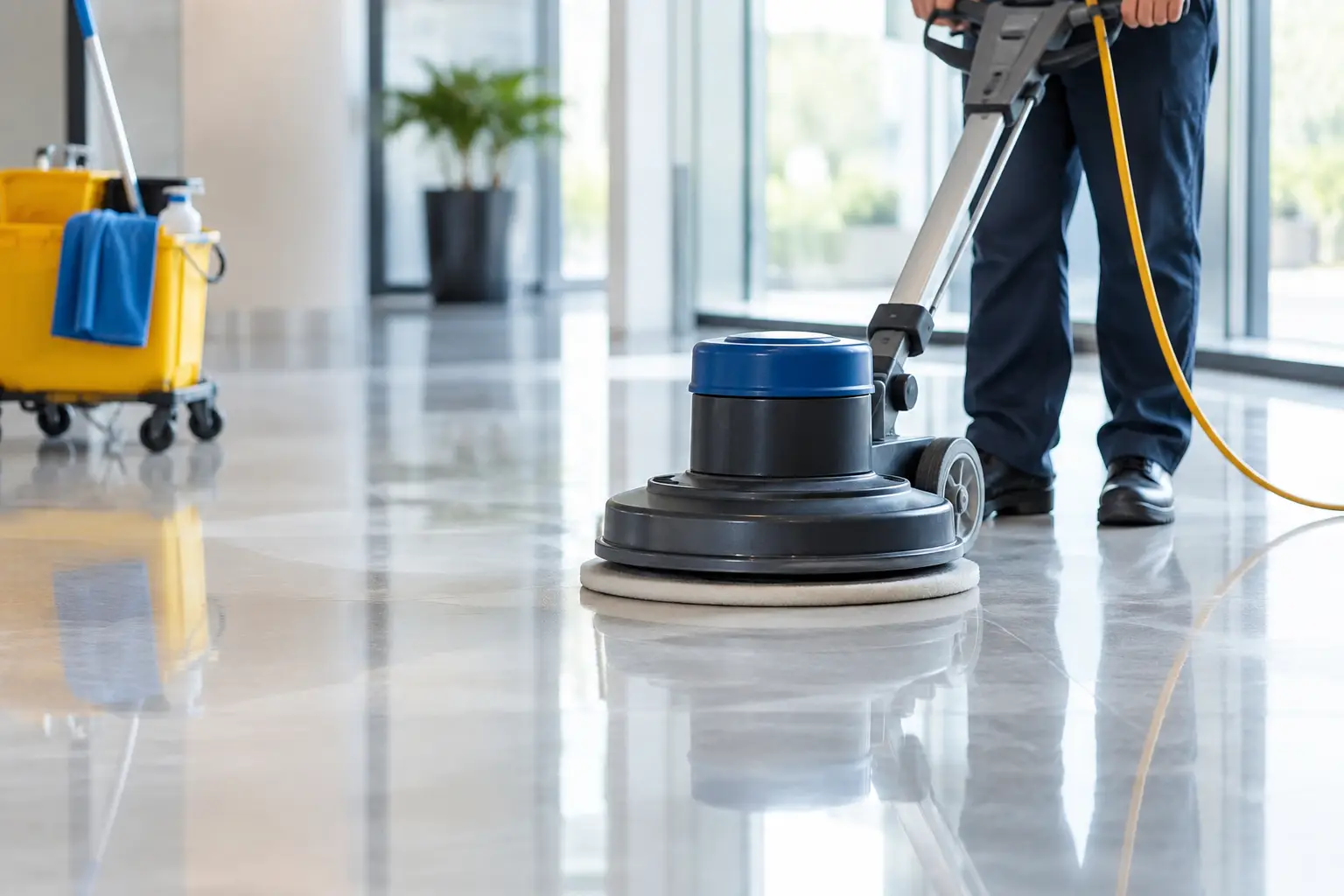
Mopping over loose grit can leave muddy streaks and grind abrasive particles into the floor finish. Dry soil removal should come first. Vacuum mats, corners, baseboards, and the floor perimeter before using a damp mop or auto scrubber.
This step is especially valuable on hard surfaces such as luxury vinyl tile, ceramic tile, sealed concrete, and hardwood. Fine sand and dirt act like sandpaper under shoes. Removing them consistently helps reduce dulling, scratches, and premature wear.
For carpeted entryways, use a commercial-grade vacuum with good edge cleaning. Address visible spots quickly, but do not over-wet carpet during spot treatment. Excess moisture can create odors, wick soil back to the surface, or leave an area unsafe to walk on.
Match the cleaner to the floor material
The wrong product can leave residue, make floors slippery, or damage the finish. Neutral cleaners are often a reliable choice for routine maintenance on many hard surfaces, but the floor manufacturer’s recommendations should guide the final decision.
Avoid using a strong degreaser just because a floor looks dirty. In an entryway, the problem is often tracked-in soil and moisture, not grease. A cleaner that leaves a film can make the surface attract more dirt and look worse sooner. Use the correct dilution ratio as well. More product does not mean a cleaner floor.
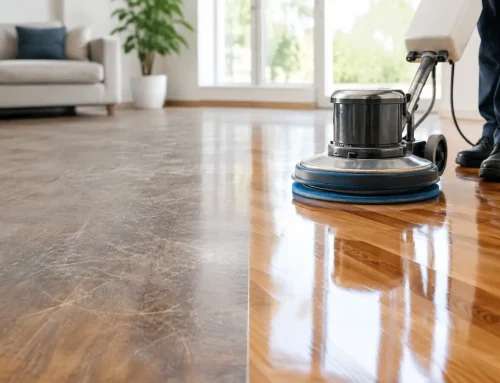
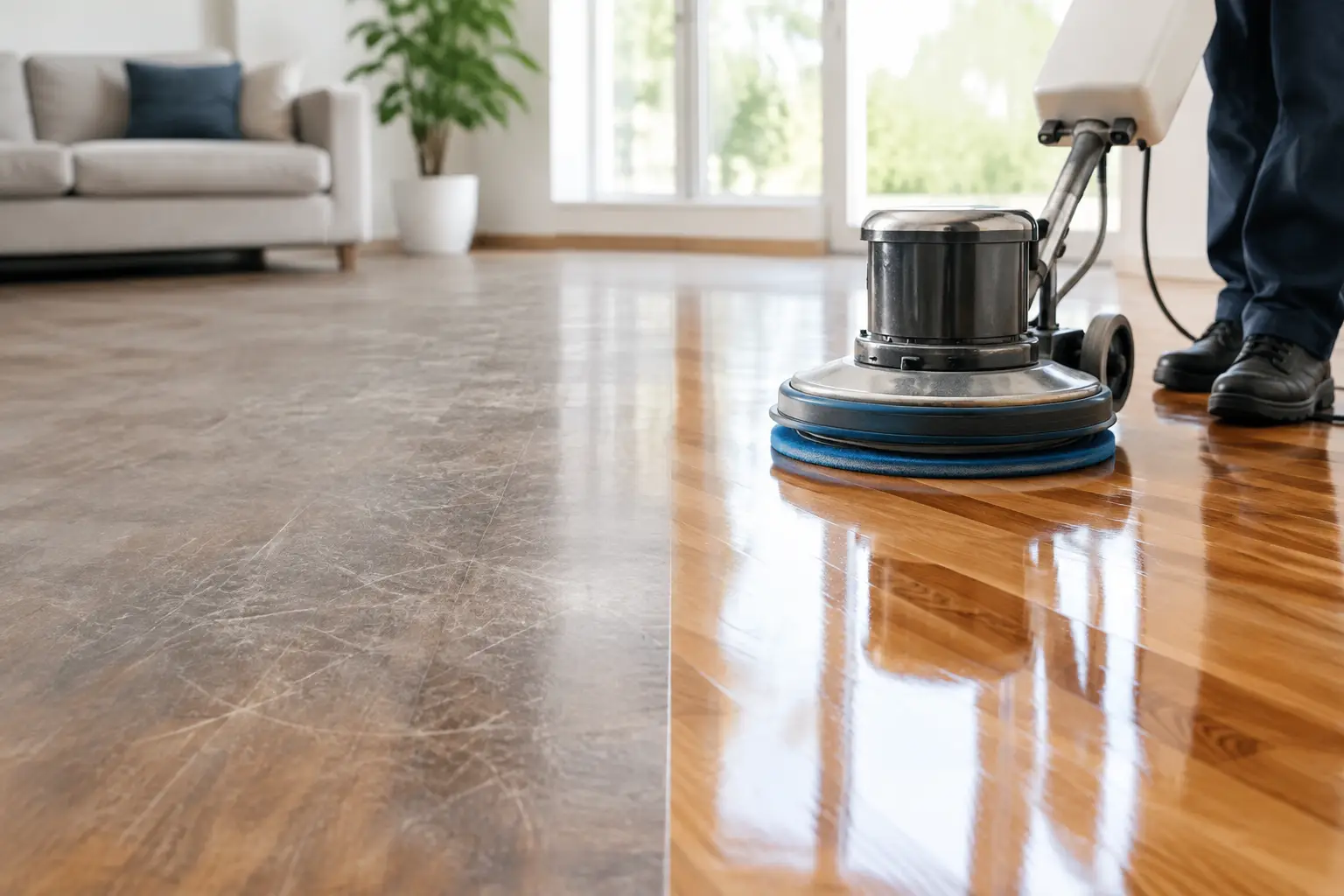
If your entryway floor is dull, scratched, or difficult to keep clean despite regular maintenance, it may need professional floor revitalizing, tile and grout cleaning, or strip-and-wax service. Routine mopping cannot restore a worn floor finish.
Keep High-Touch Details From Undercutting the Entrance
Floors draw immediate attention, but people judge an entrance as a whole. Smudged door glass, fingerprints on handles, dusty frames, and cobwebs near exterior lights can make an otherwise clean facility appear neglected.
During daily service, wipe door handles, push plates, glass doors, door frames, and reception counters near the entrance. Use a glass cleaner that dries without streaking, and use clean microfiber cloths rather than paper towels that may leave lint behind. Inspect glass from both sides because fingerprints are often more visible from the exterior.
Do not overlook the details around the door. Clean thresholds, sweep exterior corners, empty nearby trash receptacles, and remove leaves from the walkway. These small tasks make the transition from parking area to front door feel cared for.
Watch the corners and wall edges
Entryways develop dark buildup along baseboards, behind doors, and around furniture legs. These areas are easy to miss during a quick pass, yet they can make a space look dirty even when the center of the floor is clean.
Set aside time each week to vacuum edges, wipe baseboards, and inspect walls for scuffs. A mild cleaner and soft cloth can remove many marks. For painted walls, test a small hidden area first so cleaning does not remove paint or leave a dull patch.
Create a Practical Cleaning Schedule
The right frequency depends on foot traffic, floor type, weather exposure, and the kind of business you operate. A small office with mostly scheduled appointments may need one thorough daily service and occasional daytime touch-ups. A retail store, medical office, school, or multi-tenant building may need attention several times each day.
A workable entryway schedule usually includes four levels of care:
- Opening check: Remove overnight debris, vacuum or sweep, clean glass, and confirm mats are flat and dry.
- Daytime touch-up: Spot mop spills, empty trash, wipe fingerprints, and refresh the entrance after periods of heavy traffic.
- Closing service: Vacuum thoroughly, mop or scrub hard flooring, clean touchpoints, and prepare mats for the next business day.
- Weekly detail work: Clean edges, baseboards, doors, thresholds, wall scuffs, and areas beneath lobby furniture.
Keep a simple checklist for staff or your cleaning provider. It creates consistency, makes missed tasks easier to identify, and helps a business respond quickly when traffic patterns change.
Prevent Problems Before They Reach the Floor
A few operational choices can reduce cleaning demands. Place umbrella bags or stands near the door during rainy periods. Position trash receptacles where visitors can use them without blocking the entrance. Consider posting a discreet sign asking delivery personnel to use a designated entrance when they are carrying muddy equipment or materials.
Outdoor upkeep also affects indoor cleaning. Walkways, parking areas, and exterior mats should be swept regularly. When outside surfaces are covered in leaves, gravel, or soil, that material will find its way indoors. Coordinating exterior maintenance with janitorial service produces better results than treating the entryway as an isolated area.
Lighting is another practical consideration. Bright, even lighting makes spills, streaks, and debris easier to spot. It also makes a clean entryway feel safer and more welcoming, particularly during early morning or evening business hours.
Know When to Bring in Commercial Cleaning Support
Daily staff touch-ups are useful, but they should not replace detailed janitorial care. When employees are rushing to serve customers, entryway cleaning often becomes inconsistent. That can lead to worn floors, unpleasant odors, stained carpet, and a front entrance that no longer matches the quality of the business inside.
Professional commercial cleaning support can be tailored around your hours, traffic level, flooring, and priorities. CJ Cleaning Services helps businesses in Catawba County and nearby communities coordinate dependable, vetted cleaning professionals for recurring janitorial needs, floor care, and one-time deep cleaning.
A well-maintained entrance tells customers that your business pays attention before anyone says a word. Give this small but hardworking area a routine that matches its traffic, and it will keep supporting a cleaner, safer, more professional workplace every day.